A percentage fee and a flat monthly fee feel like the same kind of cost. They are not. One of them grows with you and one of them does not, and there is a point in every seller's month where the cheaper option swaps places.
Most sellers never find that point, because a percentage never arrives as a bill. It comes out before the money reaches you, which is exactly why it is so easy not to notice.
Find the month where a percentage stops being cheap
The sum takes thirty seconds.
Multiply last month's sales by the percentage your platform charges. Compare it to what a flat plan would have cost.
At around 4% on naira sales, which is what Selar publishes, plus ₦50 an order:
| Your sales in a month | The 4% fee | A ₦5,000 flat plan |
|---|---|---|
| ₦50,000 | ₦2,000 | ₦5,000 |
| ₦125,000 | ₦5,000 | ₦5,000 |
| ₦300,000 | ₦12,000 | ₦5,000 |
| ₦800,000 | ₦32,000 | ₦5,000 |
The crossover sits near ₦125,000 a month. Below it, the percentage is the better deal and you should not move. Above it, every extra naira you sell makes the gap wider, and by ₦800,000 you are paying ₦27,000 a month for the privilege of having grown.
That is the entire economics of it. Percentages are cheap when you are small and expensive when you are not, and nothing about them tells you when you crossed over.
Selar publishes around 4% + ₦50 on naira transactions, with the option to pass part of it to the buyer, plus plans at roughly ₦12,000 a month for Pro and ₦22,500 for Turbo. Checked in September 2026, and fees vary by currency, so check their page for yours.
The bigger question is what you sell
Fees are the loud difference. Fit is the one that will actually decide this for you.
Selar is built for creators selling things a buyer downloads: ebooks, courses, templates, files. It has course hosting with lessons and student access, email marketing to your list, and it handles foreign currency well. If that is your business, the rest of this article is not aimed at you and you should stay put.
SendSawa is built for things you have to pack and send. Physical goods, sold through WhatsApp, Instagram and TikTok.
Those needs diverge quickly.
What physical selling needs that digital selling does not
Stock counts. A digital product cannot run out. A wig can, and when two people buy the last one you spend your evening apologising and refunding, which costs you more than the order was worth.
A cart with several items. Digital buyers usually buy one thing. Physical buyers add a second and a third, and the difference between a ₦12,000 order and a ₦30,000 order is often just whether adding to it was easy.
Sizes and options. Small, medium, large. Two colours. A photo of the actual fabric. None of this exists in a download link.
Somewhere to ask a question first. Nigerian buyers ask before they pay. Is it available, do you deliver to Abuja, can I see another photo. A checkout page on its own has nowhere to put that conversation, so it goes back to your DMs, which is where you were trying to get out of.
Selar vs SendSawa, side by side
| Feature | SendSawa | Selar |
|---|---|---|
| Cut taken per sale | 0% | About 4% + ₦50 |
| Entry price | ₦0 | ₦0 |
| First paid plan | ₦5,000/month | About ₦12,000/month |
| Built for physical goods | Yes | Supported, not the focus |
| Built for digital products and courses | No | Yes |
| Stock tracking | Yes | Limited |
| Cart with several items | Yes | Limited |
| WhatsApp order button | Yes | No |
| Your own storefront page | Yes | Yes |
| Course hosting | No | Yes |
| Email marketing to buyers | No | Yes |
| Selling in foreign currency | Limited | Yes |
| Card and transfer for Nigerian buyers | Yes | Yes |
| Free social media page audit tool | Yes | No |
Prices and fees as published by both companies in September 2026.
What SendSawa includes that a feature table usually misses
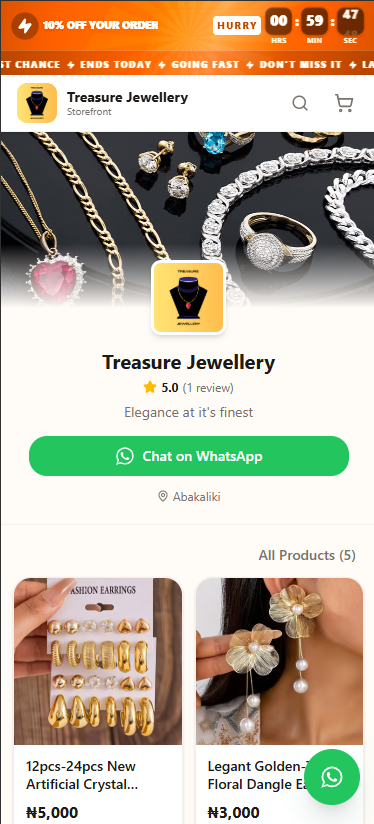
Offers that give somebody a reason to buy today. A countdown bar across the top of your store with a real deadline on it, and a scrolling strip under it doing the shouting. "Buy more, pay less", so the second item costs less than the first and your average order goes up. Flash offers on a single product. All on the Growth plan.
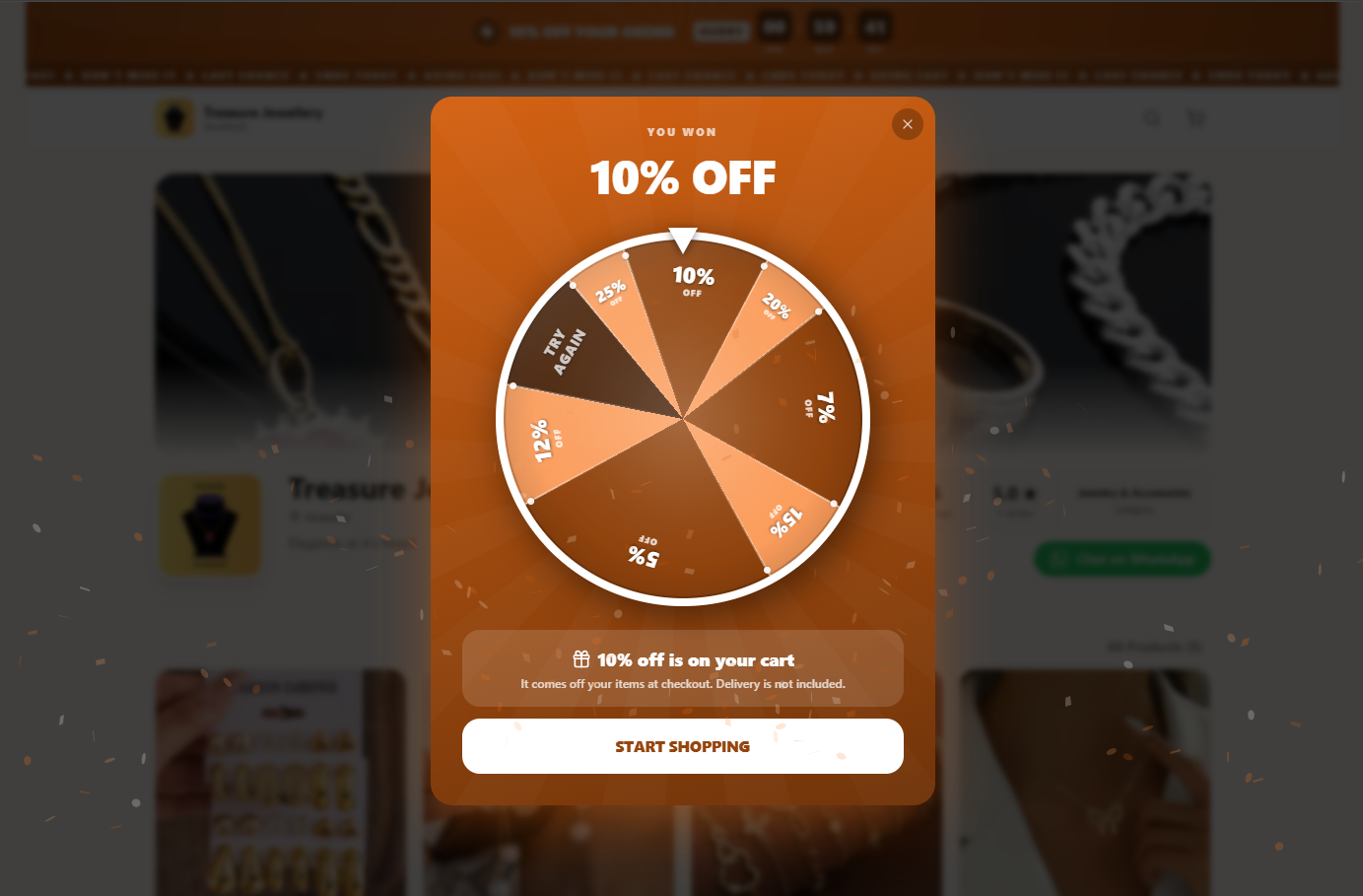
A prize wheel that greets people when they open your store. The wheel shows other numbers around the edge so the spin is worth watching, but it always stops on the discount you set. Nobody can win more than you decided to give away, and the discount lands on their cart before they reach checkout.
Follow-ups for the people who left without paying. Every buyer who filled a cart and disappeared lands in one list, with the message already written and a button that sends it on WhatsApp. Those are people who already chose the item, so it is the cheapest order you will take all week.
Reviews from people who actually bought. A review can only be left against a real order, so what sits on your storefront is not something a competitor or a friend can invent.
A free page audit, whether or not you ever open a store. Paste your Instagram, TikTok, X or Facebook page into the free page audit and you get a score out of 100 and the specific things to fix so more of your followers order. No sign up, no card, nothing to install. None of the other tools compared here offers anything like it.
Your customers, your analytics and your payouts in the same place. Who bought what, what is selling, and what is on its way to your bank, without a spreadsheet.
Running both is allowed, and often correct
This gets treated as a either or decision when it does not have to be. A seller with a skincare line and a course about skincare has two different businesses sharing one Instagram account.
Put the course on the tool built for courses. Put the jars on the tool built for things that need packing, stock counts and a delivery address. Point your bio at whichever one is making you more money this quarter.
The only real cost of running both is that you maintain two shops, which matters less than it sounds when each holds a different set of products.
Questions sellers ask
Is SendSawa cheaper than Selar? Once you are selling regularly, usually yes. Above roughly ₦125,000 of monthly sales, a flat ₦5,000 plan beats a 4% fee, and the gap grows the more you sell. Below that, the percentage is cheaper and you should stay.
Can I sell digital products on SendSawa? It is built for physical goods: stock, carts, delivery, WhatsApp orders. If courses and downloads are your main business, Selar is the better tool.
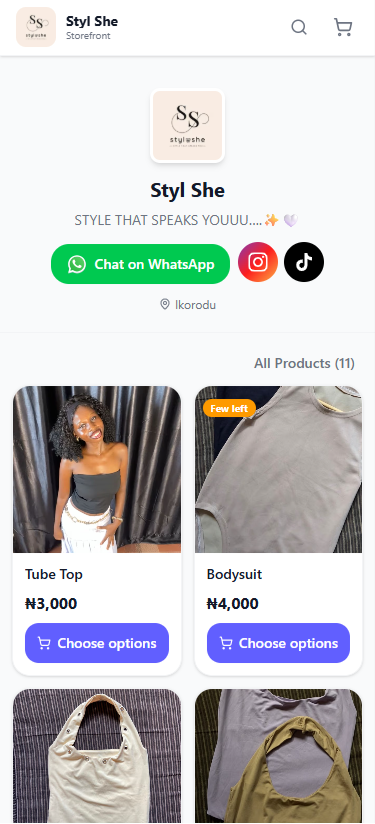
Which is better for selling on WhatsApp? SendSawa. The storefront has a Chat on WhatsApp button beside the cart, and the whole shop is one link built to be shared on status, in broadcasts and in DMs.
Does SendSawa take anything per sale? No. 0% on every plan, free and paid. Payments run through Korapay for card and bank transfer, and their charges are separate from anything the store builder takes.
Can I pass fees to my customer? Selar lets you share the transaction fee with the buyer. On SendSawa there is nothing to pass on, because nothing is taken from the sale.
Do the sum on last month
Open your dashboard, find last month's total sales, multiply by 4%. If the answer is bigger than ₦5,000, the percentage has already stopped being the cheap option for your physical products, and you have been paying the difference quietly ever since.
And if the sum says stay, stay. Then spend the evening on the free page audit instead, because a page that does not tell people how to order costs more than any percentage.